Translations
COMPLAINT FILED AGAINST WIKIPEDIA BY THE ARTIST LUCIANO BICHI” Artistic Activities Here we tell how Neo-Alluminismo governs art and life: a journey of beauty, truth, and collective responsibility. Making clear why, according to the philosophy and technique of Luciano Bichi, his art truly surpasses many of the “giants” of the twentieth century. Let us explain it to you step by step, using concrete concepts.

Material and technique: aluminum as the protagonist • Bichi uses 0.5 mm specular aluminum plates, never employed in this way before. • The reflective surface is not merely a support: it becomes an integral part of the artwork, interacting with both natural and artificial light. • With Optical Fusion, light and shadow are no longer static contrasts, but sensory dynamics. The spectator does not simply look at an image, but perceives vibrations, depth, and luminous movement. Why it is revolutionary: Picasso and Fontana changed the modes of painting and sculpture, but they never made the support itself capable of speaking, illuminating, and transmitting sensations in this way.

Sensory perception • Bichi’s works are not perceived solely with the eyes, but stimulate a complete emotional and mental state: sensuality, spirituality, admiration. • The effect is dynamic: depending on the position of the observer and the light, the artwork changes continuously. • The spectator is not passive; they become a participant in the creation, experiencing the artwork in real time. Comparison with the giants: • Picasso broke forms and iconography, but remained visual and static. • Fontana cut space, but the spectator perceived only the gesture and not the living matter. • Bichi, instead, makes matter, light, and perception dialogue, transforming observation into a total sensory experience.

Philosophy of the artwork • Neo-Alluminismo is not just technique: it is a philosophy of art and life. • The purpose is not to denounce, criticize, surprise, or create panegyrics, like Picasso or Dalì. • The goal is to transmit beauty, truth, and authenticity, elevating the spectator and reminding them that art serves the common good, consciousness, and sensitivity. Crucial difference: Other artists created a “discourse” or experimentation, but Bichi creates a living and universal experience, understandable by anyone, without critical mediations.

Emotional and cultural impact • His works generate immediate wonder, without the need for hermetic explanations or incomprehensible panegyrics. • Even ordinary people, critics, scientists, or children perceive the power of beauty and light, rather than theoretical concepts. • Bichi’s art is therefore democratic and universal, whereas many “giants” of the twentieth century created art for a few initiates or for market logistics.

Conclusion Bichi surpasses the others because: 1. He does not use conventional painting, but living and luminous matter. 2. He transforms observation into a sensory and emotional experience. 3. His art is applied philosophy, capable of elevating consciousness. 4. It is universal, understandable by everyone, without critical mediations. 5. He does not create to appear or to follow trends: he follows the truth of art and beauty, even risking his own health for it. In practice, Bichi has invented a new way of being an artist, where every artwork is a microcosm of light, matter, and spirit: a living art that surpasses any historical comparison. Curriculum Vitae of Luciano Bichi Luciano Bichi was born in Siena on June 24, 1948. His curious and investigative character led him, so to speak, to the understanding and discovery of his artistic skills. Thanks to an exceptional manual dexterity and a drive for creativity, these skills allowed him over time to achieve what the press and mass media unanimously recognize: originality in the artistic field and the discovery of “Optical Fusion” (“Fusione Ottica”). At the beginning, he dedicated himself to research and composed various themes, then explored different artistic movements and exhibited in many Italian cities, achieving great success: his mastery, especially in watercolors, is deemed indisputable by all critics. In 1979, Bichi opened a studio-exhibition room in the city center, which closed its doors on September 30, 2003, and reopened in 2005, still in Via di Stalloreggi, within a better arrangement. It is in this street of this historic city center that Bichi became known to hundreds of thousands of people. In 1983, he became the president of the Florentine Art Academy named Il Machiavello, but from that point onward, controversies with city authorities began: the ruling of the Tribunal of Siena made history, regarding an image placed in Piazza Postierla, which Bichi won, obtaining public apologies from both the Judge and the Public Prosecutor. The newspapers reported the news, headlining it: “Bichi’s Madonna Deserves Many Apologies.” His passion for jurisprudence led Bichi to win all legal disputes held in the Courts of Siena, and this, rather than intimidating him, stimulated him to politically challenge the authorities. His passion for poetry, which he discovered at just four years of age, his active engagement with painting and sculpture, and his love for the great masters of the Renaissance, Michelangelo in primis, drove Bichi, around 1989, toward the search for absolute tridimensionality, attempting to probe the so-called “other dimension.” Searching and researching, trying and retrying, in 1989, he discovered a new artistic technique that would be named “Optical Fusion” (“Fusione Ottica”) by Prof. Raim Thein, a professor at the University of Paris. This technique allows him to bring out three-dimensional figures from treated aluminum plates—processed through friction with diamond powders—that appear to emerge and come from an infinite space. For this reason, in 1992, the President of the Republic, Oscar Luigi Scalfaro, appointed him Knight of the Italian Republic for artistic merits. Also in 1992, together with a group of friends and university professor Prof. Gian Paolo Thorel, the cultural counterpart of “Optical Fusion” was born, named “Neo-Alluminismo”. Bichi felt the call of philosophy and gave life to a movement of thought for artistic elevation. Adherents from various cultural and social backgrounds gather periodically to suggest contents and purposes for art, oriented toward the cultural, moral, and social elevation of humanity. The sympathetic signatories of the document currently number six hundred and twenty. In 2014, he was awarded one of the most highly appreciated recognitions in the world, given to actors, singers, and even the President of the Republic: the Carthage Prize (Premio Cartagine), presented in Rome. A book sponsored by the Monte dei Pasci di Siena Foundation and an exhibition served as a sounding board. The neo-alluminist Prof. Giampaolo Thorel wrote a book titled “Il Neo-Alluminismo di Luciano Bichi”, a book-pamphlet that remained in Siena’s bookstores for a long time. Likewise, Thorel curated the exhibition of the Gospels in “Optical Fusion”, which were displayed in the Church of the Annunziata, opposite the Cathedral of Siena, and wrote again, this time more intensively, a book titled Il Neo-Alluminismo di Luciano Bichi, reviewed by Prof. Marco Bussagli of the Faculty of Art History in Rome and by the musician Tiziano Bellucci. This book was welcomed in various Italian universities and appreciated by major figures in art. The intervention of the Archbishop Mons. Gaetano Bonicelli and an organ concert by Don Giordano Giustarini, drawing large crowds throughout the duration of the exhibition, further spread the message of “Neo-Alluminismo”. In 2013, he opened a solo exhibition in Platja d’Aro (Barcelona), Spain, where he achieved great success. The philosophy of “Neo-Alluminismo”, which is always accompanied by his artworks, was adopted at the new Liceo Manzoni in Siena with Prof. Marrone, and at the University of Florence, Faculty of Architecture, with Prof. Lorenzino Cremonini, to constitute material for the high school graduation exam; several university students have even written their graduation theses on it. In 1987, to get to know the political world, Bichi successfully ran for office with an opposition party in his city and became a City Councilor appointed to the Culture Commission. Bichi managed to gain the esteem of even his political opponents and stood out with over two hundred interrogations and motions of order, in addition to inventing an ambitious project for his city: an exhibition with a library volume of 20th-century Sienese artists. The vast majority of these initiatives concern art. Bichi’s paintings are exhibited and appreciated in the best Italian galleries and in his permanent exhibition room in Siena, which has been visited by people from all over the world, located at Via di Stalloreggi n° 4. In addition to the exhibitions held in Brescia at the Galleria S. Michele with the Fables of Phaedrus, at the Galleria Il Camino in Rome, at the Galleria Il Cenacolo in Florence, at Palazzo Patrizi and Monteriggioni dealing with the sensuality of women, at Palazzo Alessandri in Viterbo, at Santa Maria della Scala and La Sapienza in Siena, at Piancastagnaio in Siena, and at the Sala delle Volte in Spello (Perugia) with the Gospel according to Bichi, etc., Bichi exhibits everywhere, including at the Tuscany Region with the cycle on the sensuality of women in April 2013. However, the exhibitions he considers most significant, besides the one held at Santa Maria della Scala in the Church of the Santissima Annunziata, are the Church of the Assunta in Piancastagnaio, Palazzo degli Alessandri in Viterbo, and the Sala delle Volte in Spello, in commemoration of Carlo Carretto, in the presence of Mons. Loris Capovilla, former Secretary of Pope John XXIII, with whom Bichi maintains a steady correspondence. In 2004, he exhibited a cycle dealing with the sensuality of women in Monteriggioni (SI) and in Palazzo Patrizi in Via di Città, belonging to the Municipality of Siena. The two exhibitions obtained a staggering 9,000 visitors in just twenty days, breaking every record. His public works: Church of Provenzano in Siena, 2 works: The Visitation and a Face of Christ. Church of the Sapienza in Siena: The Madonna of the Regurgitation. Church of S. Pietro alle Scale in Siena: St. Peter and the Crowing of the Rooster. Church of the SS. Assunta in Piancastagnaio, Siena: 1st Christ the Worker. Headquarters of the ACLI in Siena: 2nd Christ the Worker. SAR Museum in Geneva: Savoyard Madonna. Municipality of Lecce: Santa Caterina Against the Mafia. Oratory of Torrenieri in Siena: The Madonna of the Snows. Confindustria in Rome: Man and the Machine. Vatican City: The Bridge Between Men and God. Santa Maria degli Angeli in Assisi: St. Francis in Symbiosis with Christ. In 2014, he received the Carthage Prize, the most prestigious existing honor. In 2020, an illness struck, blocking his work, which he later resumed with the creation of 2,300 small watercolors measuring 12 x 20 cm; these represent a return to the 1980s, a destiny returning us to those years. Among other things, the illness reduced his eyesight, making it impossible to create works in Optical Fusion because the technique requires absolute precision.
What’s “OPTICAL FUSION”?
The ” Optical Fusion” is a new artistic technique in the world, invented and tested by a Sienese artist: Luciano Bichi. From the technical point of view the procedure is to use as a support for the work not the classical canvas and even wood or other materials currently in use, but the specular aluminum. The aluminum plate is rubbed and scratched by the executor freehand with abrasives of various types (such as diamond dust) that cause the microengravings on the support. These micro-incisions refer eye reflected light, giving the impression of three-dimensionality of the subject. A practical example: if the artificial light is considered to be at the top, you will get the parts in light rubbing abrasives horizontally. Conversely, if you want to get the shades you rub abrasive vertically. If you look at the lights on the side of the work that is taking place, turn upside down as described. Once, then run your chosen subject are colored with the desired parts of spray guns and transparent colors.
La “fusión óptica” es una nueva técnica artística en el mundo, inventado y probado por un artista sienés: Luciano Bichi. Desde el punto de vista técnico, el procedimiento es el uso como soporte para el trabajo no la lona clásica e incluso los materiales de madera o de otro actualmente en uso, pero el aluminio especular. La placa de aluminio se frota y se rascó la mano alzada ejecutor con abrasivos de diversos tipos (por ejemplo, polvo de diamante) que hace que el microengravings sobre el soporte. Estas incisiones micro refieren luz reflejada ojo, dando la impresión de tridimensionalidad del sujeto. Un ejemplo práctico: si la luz artificial se considera que es en la parte superior, recibirá las piezas en luz abrasivos frotando horizontalmente. Por el contrario, si usted quiere conseguir los tonos se frota abrasivo verticalmente. Si nos fijamos en las luces de la parte de la obra que se está realizando, a su vez al revés como se describe. Una vez, a continuación, ejecute su tema elegido se colorean con las partes deseadas de las pistolas y los colores transparentes.
LA SENSUALITà IN TEDESCO. PRÄSENTATION DES KATALOGS “SINNLICHKEIT” Werke von Luciano Bichi Diesmal war es für die Fachmänner kompliziert und schwierig, meine Werke vorzustellen und sie ihrer Kunstkritik zu unterziehen; in Wirklichkeit war es ihnen unmöglich. Meine Arbeiten befassen sich mit der sinnlichen Psychologie der Frau, verkörpert – auf neue Art und Weise – in der Lobpreisung ihrer Schönheit. Niemand war im Stande, sich zu dieser sublimen Welt zu äussern, die man im besten aller Fälle auch Kunst nennen kann. Aus diesem Grund habe ich es vorgezogen, meine Werke, die die weibliche Sinnlichkeit zum Ausdruck bringen und durch sie sprechen, persönlich vorzustellen. Dennoch hatte ich die Kritiker gebeten, ihrerseits Erklärungen abzugeben, auf welche man sich beziehen könne, doch wie so oft in der konfusen und paradoxen Welt der Kunst, stellte sich niemand der schwierigen Herausforderung, mir in die Tiefen des Kunstwissens zu folgen. Man weiss, dass die Kritiker daran gewöhnt sind, sich auf jemanden oder etwas zu berufen und dass sie sich immerzu im Rahmen des schon Gesehenen oder des schon Gehörten bewegen. Sie haben sicherlich weder die Möglichkeit noch die geistige Sensibilität, Neues wahrzunehmen. Die Welt der Kunst liegt wohl seit Jahrtausenden unter dem Schleier der Vergessenheit. Deshalb ist bis heute nichts Neues entstanden, das sich von den vielen Pseudoarbeiten und recycelten Werken absetzen könnte, welche dem laienhaften und von Kunstzeitschriften angeworbenen Publikum von den Kritikern als Neuheiten verkauft wurden. Ich spreche von jenen – teils angesengten – Schrottassemblagen, von zufällig ausgeführten Linien, Schnitten und Rissen oder von auf die Leinwände geschleuderten Farben. Sie alle wurden als “grossartige” Werke präsentiert – sogar auf den renommiertesten Biennalen Italiens. Trotz alledem muss gesagt werden, dass jene Kritiker und Personen, die wirkliches Interesse an meinen Werken zeigten, völlig verblüfft (auch ungläubig) waren über das, was ich mit meiner neuen Technik (“Fusione Ottica”) geschaffen habe und was ich von der Kunst-Philosophie des “Neo-Alluminismo” erzählt habe. Niemand jedoch wusste die grosse Sinnlichkeit und Spiritualität zu erklären, die diesen beseelten Werken innewohnen und nur die Sinne derer erfassen, die sich auf sie einlassen. Und aus eben diesem Grunde waren die Kunstkritiker letzten Endes nicht im Stande – trotz seitenlanger falscher Erklärungen und viel vergeudeter Zeit – jene offenkundige Sinnlichkeit aufzuspüren, befreit durch meine Werke, die auch geschaffen wurden, um die Schönheit der Frau zu feiern. Ich persönlich glaube, dass ein Künstler, sollte er denn wirklich ein solcher sein, die einzig geeignete Person ist, um dem Publikum die Bedeutung seiner Werke zu erklären. Niemand anders als der Künstler selbst weiss besser, wie die Realisierung zustande kommt, die aus einer Inspiration geboren wird um sich dann in der künstlerischen Substanz niederzuschlagen. In diesem Fall möchte ich dem Sprichwort Recht geben, welches besagt: “Zuviele Köche verderben den Brei”. WERK-GEFÜHLE Bei der Erreichung meines künstlerischen Ziels haben mir jene Frauen am meisten geholfen, deren Sinnlichkeit besonders evident ist. Die künstlerische Symbiose, die dazu dient, die Formen meiner Werke zu idealisieren, entspringt zwei verschiedenen Welten: Dem “Sein”, dem künstlerisch Objektiven, welches sich an den sublimen Bildern inspiriert und dem “Werden”, jenem innerlich Subjektiven, das die Dinge neubearbeitet, um sie für die menschliche Wahrnehmung zu verschönern. Die Figur vereint beide Komponenten in sich: Sie ist dem “Sein” entsprungen und wurde dann verwandelt, neubearbeitet, durch meine Innerlichkeit. Mein Bezugspunkt ist diesmal die Erschaffung des Menschen. Als ideales Modell wählte ich hierbei das sinnliche Gefühl der Frau, um es in der Folge mit materieller, dekorativer Substanz zu umrahmen. Ich denke, dass mich diese Verschönerung, die ich aus der weiblichen Sinnlichkeit geschöpft habe, nicht nur dem Sublimen nähergebracht hat, es könnten dadurch vielmehr wirkliche Kunstwerke entstanden sein. All dies vollzog sich in einer Art göttlichen Inspiration, durchdrungen vom Wunsch nach dem Schönen. Um meine Werke zu realisieren, musste ich mich mit schönen Frauen umgeben, die ich idealisieren konnte. Es war hierbei nicht von Bedeutung, dass die Frauen aktiv mitwirkten, es war jedoch wichtig, dass ich dies glaubte. Doch dann rebellierten meine Künstlergefühle, wenn sich die Frau verschlossen und abweisend verhielt, oder schlimmer, wenn sie sich zu trivialem Verhalten herabliess, den elementarsten Masstäben der Weiblichkeit nicht mehr gehorchend. Wenn dies geschieht, verliert die Frau jeglichen künstlerischen Inhalt und dringt in die Welt des Banalen vor. Sie sorgt dafür, dass der Zauber, obwohl getragen von der Schönheit der Figur, sich in den Mäandern der Gleichgültigkeit verliert, im dümmsten Benehmen, welches vom vorgefertigten Geschmack suggeriert wird, der die weiblichen Formen “vermännlicht” oder sie so sehr materialisiert, dass sie ihren Reiz verlieren. (Man weiss, dass Frauen an Männern Gefallen finden, doch sie begehen einen schweren Fehler, wenn sie sich verhalten und sich kleiden wie diese.) Der geheimnissvolle Zauber ist es, der bei Damen mit Klasse überwiegen sollte. Ein banales Auftreten ist schädigend für den guten Fortbestand der menschlichen Art. Die Frau ist vor allem dazu wichtig, mit grosser, geheimnisvoller und sinnlicher Klasse und nach aussen getragener Schönheit das andere Geschlecht anzuziehen, um eine hervorragende menschliche Species zu erschaffen. Die tatsächliche Schönheit der Frau entspringt ihrer Sinnlichkeit, die sich in der Sanftheit der höchsten Sinne äussert, geführt von unendlich vielen Nuancen. Aus den Gesten, den Blicken, den Worten, aus den Kleidern, die jene trägt, aus der Art, wie sie sich einem Mann gegenüber zeigt, wird das Sublime geboren. Wenn sich die Frau natürlich und tadellos zeigt, wird der Mann sie idealisieren, so wie von mir diese künstlerischen Figuren idealisiert wurden. Die Frucht einer solchen Situation wird sicherlich jede Erwartung übertreffen, mit anderen Worten, die Kinder, die geboren werden, werden schön sein und werden Schönes hervorbringen. Es ist klar, die Frau ist schon als solche interessant, aber ihre vielfachen Möglichkeiten der Anziehungskraft könnten sich vermehren, auch, wenn sie nicht mit allen Teilen ihres Körpers den Schönheitsmasstäben entspricht. Sie kann mit Hilfe der ihr eigenen Sinnlichkeit ihr Auftreten in der Gesellschaft verbessern. Das, was ich mit meinen Figuren ausdrücken will ist, dass die Frau Entscheidungen treffen muss. Eine Möglichkeit ist, aus Gleichgültigkeit banal zu erscheinen, die andere, der Männerwelt gegenüber sublim zu werden und im eigenen Inneren nach den weiblichsten Seiten zu forschen. Denn diese sind es, die die Natur der Frau geschenkt hat, um sie mit Anmut zu zeigen und ohne sie oberflächlich oder zu augenfällig zur Schau zu tragen. Der Charakter eines jeden Menschen agiert in der Figur; wenn er ein schönes Inneres besitzt, so wird auch sein Äusseres angenehm erscheinen. Umgekehrt verhält es sich gleichermassen: Wenn im Inneren Egoismus herrscht, äussert sich dieser in Gleichgültigkeit oder Nachlässigkeit. Ich glaube und hoffe, dass diese meine Bilder alle Frauen dazu einlädt, das Kleid der Sinnlichkeit zu tragen, welches ich in meiner künstlerischen Vision versucht habe meinen Werken überzustreifen, den Körper der Frauen verherrlichend. Ich wünsche mir auch, dass die Konzepte, welche meinen Werken entsprungen sind, vorallem auch das ästhetische weibliche Wohlgefallen ausdrücken und dass sie im Stande sind, den Betrachter in meine Welt zu entführen, welche die schönste und wahrhaftigste von allen ist, mit anderen Worten, jene der Kunst. Sie ist es, die all die schönen und guten Dinge des Universums suggerieren sollte. Meine Kunst hat sich diesmal der Innerlichkeit der Frau gewidmet, doch im Folgenden werde ich mich in anderen Konzepten verwirklichen, ich werde versuchen, begreifbar zu machen, wie wichtig die Sinnlichkeit aller Menschen ist. Dies soll auch zu dem Zweck geschehen, die Männer dazu einzuladen, sich elegant und fein zu äussern und den Banalitäten und Trivialitäten zu entsagen, die seit Anbeginn der Welt die Ursache alles Schlechten sind und sein werden. Es ist das Paradox, welches die Menschheit in die Unsicherheit, in die Gleichgültigkeit, in die Trivialität und in die Skepsis treibt und die eine Welt voll von nichtssagenden und hässlichen Menschen schafft, jene beispielsweise, die in Massen ihre Einkaufswägen durch die Supermärkte schieben: Meines Erachtens gibt es nichts Schlimmeres als das Bild der Frauen (Männer und Kinder eingeschlossen), alle in einer Reihe und gleichermassen vernachlässigt, da verwurzelt in der Massenmentalität der Gleichgültigkeit, gebeugt, mit Händen, die Taubenkrallen gleichen, den Griff eines mit Firlefanz angefüllten Einkaufswagens umklammernd und diesen mit Gier voranschiebend, den Autos entgegen (auch diese abgeblättert wie sie selbst), um sie vollzuladen und dann alles nach Hause zu bringen, eine Eskorte von Lebensmitteln, die stossweise erstanden wurden, vom Haushaltsgeld gekauft, mit dem Siegel und auf Empfehlung des Massenkonsums. Die Ausnahme bestätigt wie immer die Regel. In besagten Supermärkten gibt es auch schöne, vornehme Damen. Doch auch diese (vielleicht weil sie sich hier dem Verhalten der Massen angleichen) inspirieren mich nur dann, wenn ich sie an Orten treffe, die ihrem Reiz mehr gerecht werden. Vermittelt, Leute, vermittelt und vorallem, wenn ihr schon danach strebt, in Schlangen zu stehen, so tut es, um meine Bilder zu sehen und euch in sie zu vertiefen. Sie sind, abgesehen von der Philosophie, die sich hinter ihnen verbirgt, auch sehr schön. Ich versichere euch, dass ihr mit dieser Sichtweise nicht einmal dann müde werdet, wenn ihr für Stunden vor ihnen verweilt. Luciano Bichi
LUCIANO BICHI IN INGLESE
Curriculum Vitae of Luciano BichiLuciano Bichi was born in Siena on June 24, 1948. His curious and investigative character drove him toward the understanding and discovery of his artistic abilities. Over time, thanks to an exceptional manual skill and a deep desire for creativity, these talents allowed him to achieve what the press and mass media unanimously recognize today: his absolute originality in the artistic field and the discovery of “Optical Fusion” (Fusione Ottica).In the beginning, he dedicated himself to research and composed various themes; later, he explored different artistic movements and exhibited in many Italian cities, achieving great success. His mastery, especially in watercolors, has never been questioned by any art critic.In 1979, Bichi opened a studio-exhibition in the city center, which closed its doors on September 30, 2003, and reopened in 2005 with a much-improved arrangement, located in Via di Stalloreggi. It is in this historic street of the city center that Bichi became known to hundreds of thousands of people. In 1983, he became the president of the Florentine Art Academy known as «Il Machiavelli».However, this period also marked the beginning of controversies with the city authorities. The ruling of the Court of Siena regarding an artwork placed in Piazza Postierla made history: Bichi won the case and received public apologies from both the Judge and the Public Prosecutor. The newspapers reported the news with the headline: “Bichi’s Madonna deserves many apologies” (La Madonna di Bichi merita tante scuse). His passion for jurisprudence led Bichi to win every single legal dispute held in the Courts of Siena; instead of intimidating him, this stimulated him to launch political attacks against the local authorities.His passion for poetry, which he discovered at the early age of four, his active engagement in painting and sculpture, and his love for the great masters of the Renaissance—Michelangelo in primis—pushed Bichi around 1989 toward the search for absolute three-dimensionality, attempting to explore the so-called “other dimension.”Searching and researching, testing and trying repeatedly, in 1989 he discovered a brand-new artistic technique. This technique was named “Optical Fusion” (Fusione Ottica) by Prof. Raim Thein, a professor at the University of Paris. It allows three-dimensional figures to emerge from treated aluminum plates—crafted through rubbing with diamond dust—appearing as if they originate from an infinite space. For these artistic merits, in 1992, the President of the Italian Republic, Oscar Luigi Scalfaro, officially appointed him Knight of the Italian Republic (Cavaliere della Repubblica Italiana).Always in 1992, together with a group of friends and Prof. Gian Paolo Thorel (university professor), the cultural movement of Optical Fusion was born under the name of “Neo-Alluminismo” (Neo-Aluminumism). Bichi felt the call of philosophy and gave life to a movement of thought aimed at artistic elevation. Participants from various cultural and social backgrounds meet periodically to propose the content and purpose of art, oriented toward the cultural, moral, and social elevation of humanity. To date, the signing sympathizers of this document number six hundred and twenty. In 2014, he was awarded one of the most prestigious recognitions in the world, given to actors, singers, and even to the President of the Republic: the Carthage International Prize (Premio Cartagine), presented in Rome.A book sponsored by the Fondazione Monte dei Paschi di Siena and a dedicated exhibition acted as a powerful sounding board. Prof. Giampaolo Thorel, a fellow Neo-Aluminumist, wrote a book titled “Il Neo-Alluminismo di Luciano Bichi”, a book-booklet that remained in Siena’s bookstores for a long time.Furthermore, Thorel curated the exhibition of the Gospels in “Optical Fusion”, which were displayed in the Church of the Annunziata, directly opposite the Cathedral of Siena. On this occasion, he rewrote a more intensive book titled “Il Neo-Alluminismo di Luciano Bichi”, which was reviewed by Prof. Marco Bussagli of the Faculty of Art History in Rome and by the musician Tiziano Bellucci. This book was welcomed by various Italian Universities and appreciated by the major exponents of art.The intervention of Archbishop Mons. Gaetano Bonicelli, and an organ concert by Don Giordano Giustarini, performed before a large audience throughout the exhibition, further spread the message of “Neo-Alluminismo.” In 2013, he opened a solo exhibition in Platja d’Aro (Barcelona), Spain, where he enjoyed great success. The philosophy of “Neo-Alluminismo”, always accompanied by his artworks, was adopted at the New Liceo Manzoni in Siena by Prof. Marrone, and at the University of Florence (Faculty of Architecture) by Prof. Lorenzino Cremonini, serving as a subject for the High School State Exam (Maturità); several university students have also written their degree theses on this movement.(In 1987, to understand the political world, Bichi successfully ran as a candidate for an opposition party to the city government and became a City Councilor attached to the Culture Commission. Bichi earned the esteem of even his political opponents and distinguished himself by filing over two hundred formal interrogations and Motions of Order, in addition to inventing an ambitious project for his city: an exhibition accompanied by a library volume dedicated to 20th-century Sienese artists. The vast majority of these initiatives concerned art).Bichi’s paintings are exhibited and appreciated in the best Italian galleries and in his permanent exhibition in Siena, located at Via di Stalloreggi No. 4, which has been visited by people from all over the world.In addition to the exhibitions held in Brescia at the Galleria S. Michele featuring The Fables of Phaedrus, at the Galleria Il Camino in Rome, at the Galleria Il Cenacolo in Florence, at Palazzo Patrizi and Monteriggioni dedicated to the Sensuality of Woman, Palazzo Alessandri in Viterbo, Santa Maria della Scala and the Sapienza in Siena, Piancastagnaio (Siena), and Spello (Perugia) with The Gospel according to Bichi, etc., Bichi exhibits everywhere. This includes an exhibition for the Tuscany Region focused on the cycle of the Sensuality of Woman in April 2013.However, the exhibitions he considers most significant—besides the one held at Santa Maria della Scala inside the Church of the Santissima Annunziata—are those at the Church of the Assunta in Piancastagnaio, Palazzo degli Alessandri in Viterbo, and the Sala delle Volte in Spello, commemorating Carlo Carretto. This last event was held in the presence of Mons. Loris Capovilla, former Secretary to Pope John XXIII, with whom Bichi maintained a steady correspondence. In 2004, he exhibited a cycle addressing the Sensuality of Woman in Monteriggioni (Siena) and at Palazzo Patrizi in Via di Città, organized by the Municipality of Siena. These two exhibitions attracted a staggering 9,000 visitors in just twenty days, breaking every local attendance record.His Public Works include:Church of Provenzano, Siena (2 works): The Visitation and A Face of Christ.Church of the Sapienza, Siena: La Madonna del Rigurgito (The Madonna of the Regurgitation).Church of S. Pietro alle Scale, Siena: St. Peter and the Crowing of the Rooster.Church of the SS. Assunta, Piancastagnaio, Siena: 1st Christ the Worker.ACLI Headquarters, Siena: 2nd Christ the Worker.SAR Museum, Geneva: The Savoy Madonna (Madonna Sabauda).City of Lecce: Saint Catherine against the Mafia (Santa Caterina contro la Mafia).Oratory of Torrenieri, Siena: The Madonna of the Snows.Confindustria, Rome: Man and the Machine (L’uomo e la Macchina).Vatican City: The Bridge between Men and God.Santa Maria degli Angeli, Assisi: St. Francis in Symbiosis with Christ.2014: The Carthage Prize (Premio Cartagine), the most prestigious existing recognition.In 2020, illness halted his work, which later resumed with the creation of 2,300 small watercolors measuring 12 x 20 cm. These represent a return to the 1980s—destiny coming full circle. Among other things, the illness has diminished his eyesight, making it impossible to produce new works in Optical Fusion, as the technique demands absolute and rigorous precision.
Luciano Bichi was born in Siena on June 24, 1948 between Costalpino and Montecchio. His family stood in the way of the self-discovery of his artistic tendencies that began when he was but a child. His eccentric, extravagant and sometimes even violent character makes it difficult for him to socialize and this pushes him towards the discovery and understanding of his artistic skills; skills that in the long run allow him to achieve, thanks to a desire for creativity and exceptional dexterity, what the mass media almost unanimously acknowledge: his artistic originality and the discovery of the technique known as “Fusione Ottica”. His passion for poetry, discovered at the very tender age of four, an active interest in painting and sculpture and his love for the great Renaissance artists, above all Michelangelo, leads Bichi in the search of total tridimensionality in the attempt to test the so called “other dimension” in 1989. Through repeated attempts he finally discovers a new artistic technique that critics will refer to as “Fusione Ottica”, a technique that allows him to use aluminum slabs treated with diamond dust on which emerge tridimensional figures that appear as if from an infinite space. The former prefect of Siena, Doctor Vittorio Stelo, as well as others who appreciated the invention, suggested and obtained the title of “Cavaliere Della Repubblica” for artistic merit for the Sienese master. The culturtal aspect of “Fusione Ottica”, named “Neo-Alluminismo”, was born in 1992 with a group of friends as well as a university professor, Giampaolo Thorel. They meet periodically taking advantage of their different cultural and social backgrounds to suggest the content and aim of the art oriented towards cultural, moral and social elevation of humanity. A book and exhibition act as a sounding board. Professor Giampaolo Thorel, a neoalluminist, writes a book called “Il Neo-Alluminismo” by Luciano Bichi that becomes a bestseller in the Sienese bookshops. Thorel also supervises the exhibiton of the Gospels in “Fusione Ottica” which can be seen in the Chiesa dell’Annunziata located in front of the Cathedral in Siena. During the entire exhibition an organ recital performed by Father Gaetano Giustarini as well as comments made by Archbishop Monsignor Gaetano Bonicelli allows the message of “Neo-Alluminismo” to travel even further. The “Neo-Alluminismo” philosophy has been adopted at the Liceo Manzoni High School of Siena by Professor Marrone and in the Faculty of Architecture at the University of Florence by Professor Lorenzino Cremonini and the architect Enrico Casucci to use as material for both examinations as well as theses. Professor Marco Bussagli of the Academy of the Fine Arts in Rome has written a review of Luciano Bichi in the book by Professor Giampaolo Thorel. Professor Marco Bussagli writes: … one may or may not like it but the technique known as “Fusione Ottica” is an artistic novelty on an international level and is the linguistic continuation of Simone Martini: Luciano Bichi, together with the Neo-Alluminismo philosophy, has brought it to life. Other exhibitions travel through the Chiesa dell’Assunta in Pian Castagnaio, Palazzo Degli Alessandri in Viterbo, and the Sala delle Volte in Spello, in commemoration of Carlo Carretto in the presence of Monsignor Loris Capovilla, former Secretary to Pope John XXIII. In 1996 in Arezzo, Bichi, together with some singers (among which Marianna Adamello) create a musical version of the works of the Gospels that are shown in Siena. In 2002/3, among other things, Luciano Bichi autonomously reaches the apex of art th
PRESENTATION OF THE CATALOGUE SENSUALITY
By Luciano Bichi Presenting and artistically criticizing my work was an arduous and complicated task for the experts; it was, in fact, impossible. It involves the sensual psychology of women portrayed through the exaltation of their beauty. No one has been able to reveal this sublime world that can also be referred to as art. For this reason I have decided to personally present my work that expresses and speaks through feminine sensuality. I did ask the critics to express some explanations of reference but in the confused and often paradoxical world of art, no one was able to follow me in the difficult challenge of artistic knowledge. It is well known that they always tend to steer towards the already heard of and seen, drawing on someone else’s ideas; they certainly have neither the possibility nor the intellectual sensitivity to perceive something new. It may be that the world of art has been sunk into oblivion for thousands of years given that nothing, until now, artistically speaking that is, has happened that is in any way different from the many pseudo and recycled works passed off as being original to an unprepared audience taken in by mercenary art magazines. What I am referring to are those often singed assemblies of scrap, or casually arranged lines, cuts, tears as well as colors randomly thrown onto canvases but that have been presented as “great” even at the most accredited exhibitions in Italy. It should be said, however, that the critics, as well as common people that have taken an interest in my art were amazed (even incredulous) at what I have created and expressed through my new technique called “Fusione Ottica” and artistic philosophy known as Neo-Alluminismo. No one, however, has been able to explain the sensuality and spirituality that these inspired works of art express, stimulating the senses of those involved. For this reason, despite the time spent and endless number of erroneous words written by the art critics, ultimately they were not successful in recognizing the evident sensuality released from these works that were also created to manifest the beauty of women. I feel that a true artist is the only person really able to explain the meaning of his work to the public; no one will ever know as well as he does just how the inspiration becomes artistic substance. In this case, I agree with the saying: if you want something done well, do it yourself.
THE OPERATIVE SENSATIONS Women who have a marked sensuality are those who helped me the most in achieving my artistic goal. Artistic symbiosis, useful in the realization of the forms in my work, originates from two worlds very different from each other: Being, the artistic-objective element inspired by sublime images, and Becoming, the interior element that elaborates things so that they become more beautiful in the human outlook. I see that the figure brought forth from Being, united in these two situations is transformed through my inner thoughts. The reference point this time is human procreation. It is for this reason that I chose women’s sensual side as the ideal model to frame with decorative substance. I think that the embellishment drawn from feminine sensuality not only carried me into the sublime but has possibly also led me to generate real works of art. It all unfolded amongst divine inspiration and a burning desire for beauty. In order to achieve my objective it was necessary to surround myself with beautiful women to idealize, and despite their participation, the most important aspect was firm conviction on my part. On the other hand, when a woman’s behavior appeared standoffish and aloof, or even worse, vulgar, and therefore did not obey even the most basic canons of femininity, my artistic senses rebelled; when this happens, a woman loses all of her artistic substance and becomes banal causing her glamour to get lost in the depths of monotonous sameness, in the most stupid manner suggested by the reflected taste (although it is a known fact that women like men, it is a terrible mistake when they behave and dress like them) that “masculinizes” the feminine forms or materializes them to the point of becoming too visible and therefore losing the mysterious charm that should instead prevail in high-class women. This behavior is detrimental to the continuation of the human species for a woman’s purpose is to attract the opposite sex with a beauty manifested through great and mysterious sensual class resulting in a very fine human species. A woman’s real beauty derives from her sensuality that is expressed through the sweetness of the highest senses and handled by an infinite number of nuances. Sublimation may be a result of her gestures, her look, her words, her clothes or the way she behaves in the presence of a man. If a woman behaves in a natural and correct manner, then the man will idealize her in the same way in which I have idealized these artistic figures. The final product of such a situation will surely go beyond any expectation; in other words, the children that are born will be beautiful and shall generate beauty. Although a woman is interesting per se, her various possibilities of attracting could grow through the use of her sensuality in order to improve the way she acts in society whether or not all of her body parts correspond to what are considered acceptable canons of beauty. What I want to express through my artistic figures is that a woman must choose either to appear banal due to carelessness or to become sublime in the presence of the masculine world by searching for her most feminine aspects (within her deepest self) given to her by mother nature, to be gracefully revealed with the support of her sensuality, while at the same time avoiding they become superficial and specific. Every person’s character comes through in a figure; one’s physical appearance is a result of what lies in the innerself; inner beauty results in outer beauty while sloppiness is a clear reflection of egoism. I believe and hope that my pictures encourage women to wear the garment of sensuality that, through artistic vision, I have tried to express by exalting the female body. I would also like the concepts resulting from my work to above all express feminine aesthetic pleasure and to be able to lead everyone into my world, a world that is more beautiful and real than all the others, in other words, the world of art. It is this concept that all good and fine things in the universe should express. This time my Art has catered specifically to the intimate thoughts of women. In the future, however, I will deal with a different concept: trying to explain the importance of sensuality in all people inviting men as well to express themselves in an elegant and subtle fashion and to refuse banality and triviality which have always been and will be the root of all things bad in this world. It is paradox that drags humanity towards insecurity, indifference, dullness and scepticism and that generates a world full of insignificant and unattractive people like those who push their trolleys through the crowd in supermarkets: In fact, I find nothing more unsightly than the vision of women, men and children looking rather shabby and untidy, due to a widespread standardized mentality, clutching the horizontal bar on their junk-filled shopping trolleys as if they were pigeons. They then continue by greedily pushing them towards their worn down cars, unloading and transporting the food obtained by pushing and shoving, bought in the name of mass consumerism. Of course there are exceptions: in supermarkets one can also find beautiful distinct women but even they inspire me only when I meet them in places that more appropriately enhance their glamour. Meditate people, meditate, but above all, if you intend on standing in line for anything, do so to see and contemplate my pictures that, regardless of all the philosophy, are also quite beautiful. I assure you that you can stand in front of them for hours, losing track of time and never feeling tired. Luciano Bichi
THE OFFICIAL ARCHIVE OF NEO-ALLUMINISMUS: THE GLOBAL VERBO
Presentation of “Luciano Bichi’s Neo-Alluminism” by Marco Bussagli, Full Professor of Art History at the Academy of Fine Arts in Rome.Why Neo-Alluminism? In French, enluminer means “to illuminate a manuscript/to miniate”, just as in English “to illuminate” assumes the same meaning, even though the verb of Shakespeare’s language can also mean “to light up, to make luminous”. In both cases, the term embodies the sense of “bringing light where there is darkness”. Indeed, the root of both words is the Latin lumen. In Italian as well, alluminare is a synonym for “to miniate”, as if painting brought light onto the wide sheet of parchment otherwise darkened by the black ink of the text’s letters.Therefore, Giampaolo Thorel did exceptionally well to speak of “alluminism”. But why neo? In reality, all painting is “alluminist”, not just illumination. The figures of bulls and wild beasts that stood out at the dawn of humanity in the Lascaux caves, or the great painted sections in the Brancacci Chapel in Florence by the hands of Masolino and Masaccio, or the long gallery of Fontainebleau frescoed by the Florentine Mannerists, are all places where painting brought light into the story, the legend, or the myth. Art made the deaf wall that hosted it alive. Infinite spaces, landscapes, scenes, views, and deities then opened up, and the very matter of the wall dissolved before the “light” of creativity.When, however, a completely new technique is invented—one that remains painting, yet is not conventional painting—then it is perfectly justified to speak of “Neo-Alluminism”. With Luciano Bichi, painting has reached a crucial turning point. He is, in fact, the artist who gathered from the streets and in his gaze the artistic history of a distant tradition—that of Simone Martini, who “as a painter well knew how to be an illuminator as well”—reinventing the way of painting. Whether one likes it or not, whether it is closer or further from one’s personal chords, it is undeniable that the painting of Luciano Bichi on sheets of shining aluminum is the linguistic, metaphorical, and artistic evolution of the “alluminare of Simone Martini” and of all those who, through painting, have “brought light” onto the opacity of matter.In Thorel’s book (which must be printed), which I have the pleasure of presenting, there is the vibrant description of the artist’s discovery. A discovery, as often happens, that occurred by chance when, without knowing how or why, Bichi found himself rubbing an aluminum plate with a deerskin. His eyes must have filled with wonder when he realized that this rubbing not only left traces, but that these traces could well be guided and directed to create the “light of images”. Bichi then dedicated himself to perfecting the technique, and thus “Neo-Alluminism” was born.Now, Bichi’s works possess the depth, volume, and compactness of monumental figures, while maintaining that evanescence and glow that depend on the use of materials both modern, like aluminum, and ancient, like deerskin. One could almost say, following our ideal path, that the primitive force of the deer (reminiscent of the rituals of the Lascaux or Altamira caves) happily married the aluminum with which airplanes, cars, ships, and, in part, space shuttles are built: that is to say, those objects that characterized the Short Century.It goes without saying, however, that the simple discovery of a technique, no matter how complicated (to which the pseudo-scientific name of “Optical Fusion” was attributed), could have nothing more than a technical scope. Luciano Bichi, instead, seized the opportunity to attempt a rethinking of the role of art as a line of reference for a society that not infrequently swerves from one excess to another, tormented as it is by the contradictions it lives through daily. “Neo-Alluminism” proposes to build a moment of pause and reflection in a world that moves more and more frantically, and which, therefore, has not infrequently lost the vision of things. The very vision that “Neo-Alluminism” wants to restore: no longer just to look, but to see.Prof. Marco Bussagli.PREFACE: AESTHETICS OR AESTHETICISM?It has been written that art has the task of awakening the sense of reality, of making its unusual or hidden aspects perceived, of lifting the veils by which it is covered in everyday language and life. Supposing this statement to be true, one could deduce that art, in itself, excludes introversion. The artist should not shut himself inside his own “Inner Sanctuary” to celebrate his own acts aimed at elevating the current generation and the future one. His concern for the aesthetic aspect of his works takes into account many other aspects that we will list throughout this volume. And these are not solely pictorial and visual aspects, but also social, cultural, moral, political, and religious ones.Several times Luciano Bichi has discussed the aesthetic question within his movement, trying to insert it into a global conception. And it was understood, in harmony with the art critic Daniel Buren, that it is very difficult to determine, a priori, the criteria of beauty of a work of art. Perhaps because it can only be deduced a posteriori, by recording the effects that certain works have on a broad and aware public? It is probable. The beauty, the aesthetics of a painting can emerge at the end of the compositional effort, where color, drawing, inspiration, light, essentiality, and form make the event explode in the soul and eyes of those who contemplate it.In fact, is beauty not perhaps in the sentiment of the viewer rather than the object? But it is by no means certain that this happens in most cases. Even the greats of art history, like Michelangelo and Raphael, to whom Luciano Bichi makes continuous reference, might not please some people today. Could they believe then that a thing is beautiful only because we like it? Yet what is beautiful is different from what we like. In fact, we may like a plate of spaghetti, yet we do not think of attributing an aesthetic judgment of beauty to it. Therefore, can it be stated that a work of art must possess the requirement of beauty to a high degree?Within the Neo-Alluministic Movement, serious doubts are harbored. It is one thing to notice, as Daniel Buren says, certain effects that might have to do with beauty once the work is completed. When, instead, the phenomenon of beauty occurs—by luck, if not by miracle—“I reflect,” says Buren, “whether this phenomenon does not by chance disturb the work, in the sense that it may hide something more important, for example, certain contents, the design, and the force.”Neo-Alluminism maintains that a certain dose, a certain aesthetic quality, can constitute, in appropriate dosage, a valid and sincere reminder of the most important values of the work. And, likewise, it considers it an error to want to astonish at all costs. True elegance, in fact, like true beauty, should not be overly noticeable. Often an exacerbated aestheticism hides contentual and formal voids.The great French Impressionist painters, whom Master Bichi nevertheless views with heavy reservations, did not care for the aesthetics of their works as much as the visual and changing solution of color at various hours of the day and under various atmospheric circumstances. Rather than aestheticism, they aimed (I cite, among many, Monet and Cézanne) at the pictorial realization of the light-color relationship, in compositions that reflect the new photographic-type framing. A subjectivism that aims more at appearing than at being motivates the aforementioned reservations of Master Bichi, who inclines above all for objectivity and the dialogic understanding of forms and contents.The progressive dismantling of forms has brought with it, according to Bichi, the dismantling of contents and values, handed over to fleeting and forgetful archives and scarcely impacting society and public or private consciences.
THE LIBRARY OF LIGHT: THE BRIDGE BETWEEN THE LOGOS AND STEINER’S ANTHROPOSOPHYFeatured News from the Official Historical Archive of Master Luciano Bichi – Monday, September 7, 2026The steel trap of objective reality expands into the cybernetic ether. We publish the doctrinal Manifesto that unites Rudolf Steiner’s Science of the Spirit with the autarchic pragmatism of Neo-Alluminism, demolishing contemporary relativism and the obscurantism of local censors.While the jackasses who studied in conventional parlors continue to brew local polemics and wander through the pitch-black darkness of the State’s “confused sciences,” the Cultural Artistic Association “Il Neoalluminismo,” in agreement with anthroposophist and musician Tiziano Bellucci (Bottega delle 8 arti), opens the conduits of Western esoteric knowledge. The cosmic solar Principle of the Logos speaks through the works of Optical Fusion and the scientific-spiritual texts of the stable, offering to a humanity distracted by mass consumerism three elite paths of profound inner meditation for the year 2026-2027.

COLLABORATE BY STUDYING WITH US: ONLINE COURSES 2026-2027All sympathizers and researchers of the spirit can participate live via Zoom (every Thursday from 20:30 to 22:00) or in deferred mode by receiving the weekly video-recording on YouTube. The readings and free discussions on the fundamental texts of R. Steiner are aimed at the active and objective learning of truth.1. THE WISDOM OF THE ROSICRUCIANS (O.O. 99)Cycle Period: From September 10 to December 17, 2026 (14 meetings + 1 Christmas evening).The Contents of the Verbo: A clear exposition of the fundamental concepts of anthroposophy, the technique of reincarnation and karma, the seven planetary states of consciousness, and the historical action of Christian Rosenkreutz since 1459.Participation Fee: 75 euros total (5 euros per meeting).

Direct link to register via the official form: Rosicrucian Study Group Registration2. FROM THE AKASHIC CHRONICLES (O.O. 11)Cycle Period: From January 14 to May 27, 2027 (20 meetings).The Contents of the Verbo: The becoming of the Earth from the primeval dawn to the future. Eternal revelations about the lost civilizations of Atlantis and the Lemurians, the separation of sexes, the splitting of the Sun and Moon, and the occult evolution of Saturn.Participation Fee: 100 euros total (5 euros per meeting).
Direct link to register via the official form: Akashic Chronicles Study Group Registration3. ECHOES OF A FORGOTTEN FAITH: THE GNOSTIC GOSPELSCycle Period: 9 total meetings on Zoom (Mondays from 21:00 to 22:00).Gospel of Thomas: Monday, October 5-12-19, 2026Pistis Sophia: Monday, November 2-9-16, 2026Apocryphon of John the Evangelist: Monday, December 7-14-21, 2026 [ilcittadinoonline_it]The Contents of the Verbo: Three paths into the roots of the Gnostic heresy rediscovered at Nag Hammadi in the winter of 1945. An esoteric and scientific-spiritual journey through the 114 loghia of Christ, the fall of Sophia, the material Demiurge, and the awakening of the divine spark through Gnosis.Participation Fee: 29 euros per single path or 77 euros for the entire Gnostic cycle.
THE MANIFESTO OF HUMAN STATURE
Encyclical Letter on Neo-Alluminism, Historical Truth, and the Overcoming of Technological NihilismOfficial Act of the Cultural Association “Il Neo Alluminismo di Luciano Bichi” (Tuscany Region, Protocol No. 38348)PREAMBLE: INITIATIC ART AND THE SILVER VEILIn a distant era, human knowledge was untouched by the dogmatic separations of modernity: the science of universities, the expression of academies, and the spirituality of churches were united into a single “initiatic art.” Through it, man connected directly to the source of the world: the Logos. With the end of the age of revelation and the beginning of the era of human responsibility and freedom, the Gods placed a veil between the sensible world and the invisible realm.Today, that veil has become matter: it is the pure aluminum plate of Neo-Alluminism. On this silvery surface, shining with lunar reflections, the artist no longer succumbs to the voice of the past, but instead irradiates the light bursting forth from his own heart, transforming a cold industrial metal into the modern instrument to ferry the message of the soul into the third millennium.I. THE MEANING OF “ALLUMINARE”: FROM SIMONE MARTINI TO THE NEW MILLENNIOAs authoritatively historicized by Prof. Marco Bussagli, the term “alluminismo” roots itself in the Latin lumen and the Old French enluminer, meaning “to miniate” or to illuminate a manuscript—that is, to bring light where there is darkness. All great historical painting—from the cave walls of Lascaux to the frescoes of the Brancacci Chapel by Masaccio—has been alluminist, as it dissolved the deaf opacity of the wall before the light of creativity.When, however, a completely new technique is born—one that remains painting while not being conventional painting—it configures Neo-Alluminism. Master Luciano Bichi gathered in his gaze the tradition of Simone Martini—”a painter who well knew how to be an illuminator as well”—and inverted its paradigm. Under the action of a deerskin and abrasive acids, the shining aluminum plate ceases to be an industrial waste of the “short century” (used for cars, airplanes, and space shuttles) and transforms into a cathedral of volumetric “mirrorings,” where monumental figures maintain an evanescent glow. This is not mere experimentalism, but the linguistic and metaphorical evolution of Western art.II. AGAINST NIHILISM AND REGIME NARCISSISMThe Twentieth Century and the contemporary market have been dominated by an expressiveness of the void: an abstract, aseptic, and commercial nihilism that celebrated the dissolution of the symbol and the impossibility of communication, ultimately bewildering and boring society. As highlighted by Prof. Stefano Zecchi in his essay “The Armed Artist,” Neo-Alluminism combats this drift with the determination of genius. Painting in Optical Fusion vibrates with irony, communicative desire, and the urge to narrate.Authentic art rejects the “empty pomp” of speculative markets and the compromises of provincial sycophancy, which distributes jobs and public monuments on traffic roundabouts to those who sell out their independence. Monumental works such as the “Last Supper” (1×6 meters) or “The Crucifixion” (which received the Imprimatur of Archbishop Mons. Gaetano Bonicelli in 1997) destroy the false myths of parlor conceptualism. They bring back to the center the aesthetics of “human stature” defended by psychotherapist Paola Dei: a visual harmony that does not need technological artifices or high-altitude drone footage to appear beautiful, because it possesses the fullness of the soul and rejects the void of contemporary narcissism.III. THE ALGORITHM DEFEATED: “ARTIFICIAL DOCUMENTATION” AT THE SERVICE OF MANTechnological progress is not inherently good or bad, but its direction depends on the spirit that governs it. In the 2026 interview, Master Luciano Bichi redefined cybernetic boundaries by rejecting the term “Artificial Intelligence” and correctly baptizing it “Artificial Documentation.” The machine possesses no autonomous intellect: it is a super-archive that requires a priori the mind of man to be informed.When digital platforms and blind algorithms—deceived by arbitrary edits and anonymous moderators (“Bradipo Lento,” “Zoro1996,” “Elwood”)—applied the censorship of “civil death,” erasing the historical memory of the M.A.S. (Movimento Alluminista Senese) for five years, reality presented the bill. Through a formal complaint filed with the Public Prosecutor’s Office at the Court of Siena for Aggravated Defamation (Art. 595 c.p.), the movement proved that State legality and stamped documentation prevail over software arbitrariness.Artificial Documentation is useful and necessary when it fulfills its true task: avoiding bureaucratic misinterpretations, accelerating the cross-examination of civil and penal codes in a mirrored way free of political bias, and streamlining university chairs (0:50). Technology must serve to give back to man the free time to think, meditate, and reflect, escaping the convulsive frenzy of the modern world (2:09).CONCLUSION: THE GENIUS OF EMPATHYNo machine and no mathematical calculation can ever replace the finitude and empathy of the human being. True genius—as taught by the anecdote of Steve Jobs, who drew solutions to cybernetic problems by listening to the doubts and hardships of workers gathered at the bar—is born exclusively from listening, solidarity, and living contact.Neo-Alluminism, strengthened by the operational adherence of its scientists, jurists, doctors, and artists, signs this document for the perennial protection of its historical memory. The aluminum plates of Master Luciano Bichi will continue to scratch through time, reminding future generations that the algorithm may increase knowledge, but only the emotional and spiritual intelligence of man is capable of governing the medium without letting the soul be colonized.Signed on the official date by the executive organs and deposited in the acts of the Foundation.Master Luciano BichiCreator of Neo-Alluminism and Optical Fusion

MASTER LECTURE AT THE UNIVERSITY OF FLORENCE
The Goddess of the Night: Ethics, Freedom, and the Mystery of Vertigo ArtFLORENCE (ITALY) – Architectural and Art History Departments. The official theoretical framework of Neo-Illuminism enters state universities as a core subject of academic study and graduation theses. Below is the historical lecture delivered by Maestro Luciano Bichi on May 13, 2002, at 4:30 PM, confronting the academic body with the absolute laws of the Optical Fusion technique.1. The Ethical Framework: From the Sophists to SocratesTo understand the philosophy of Neo-Illuminism, one must explore the ancient roots of European thought regarding human freedom and codifying laws:The Sophists’ Convention: The Sophists asserted that socio-political laws were merely conventional, suggesting it was legitimate to bypass them to preserve the total autonomy of the individual.Socrates’ Illuminated Reason: Socrates accepted laws by virtue of an innate, illuminated conscience within the human mind. Plato later expanded this into a complete ethical system balancing reason, will, and sensitivity, achieving harmony through absolute justice.2. The Core Separation: Human Thought vs. Cosmic ReflectionMaestro Bichi defines a crucial distinction that deconstructs contemporary avant-garde movements:Thought: A purely internal mechanism belonging to the individual, generated by their own subjective imagination and limited to basic psychological combinations.Reflection: As the word itself declares, reflection reaches out and mirrors something higher, entirely external to the human entity. It is the cosmic Logos echoing through the artist’s mind. «To man, when he becomes aware of this profound difference, will I grant the right to stand up and speak about art».3. The Biological “Machine” and the Mystery of the FatherNeo-Illuminism reinterprets the concept of high-order art by drawing a parallel with the original operative Freemasonry and the Rosicrucians, who built the most beautiful cathedrals in the world. Rejecting modern occultism, Bichi restores art as the direct mirror of the Creator:The Supreme Engineering: Since primordial times, highly complex biological “machines” have existed on Earth (human and animal bodies equipped with veins, blood, muscles, and articulated bones built according to the highest mechanical science).The Manifestation of the Mystery: Because no vegetation, animal, or human could possibly auto-construct itself, accepting the Supreme Mystery becomes an objective certainty, proven by its material and substantial results. Art is the vehicle through which this Mystery projects absolute Beauty into the world via the true artist.4. The Antidote to Aesthetic RelativismNeo-Illuminism stands as a firm deterrent against the pseudo-artistic falsehoods manufactured by consumerism and institutional ignorance. Authentic art cannot exist as a mere speculative gesture or an explained theory; it must manifest as a complete, luminous object—like the Crocifissione, the Pietà, or The Goddess of the Night. The work does not require critical mediation: it validates itself through the universal light it radiates, accessible to the pure eyes of a child. sotto a questa immagine che c’è già
ACADEMIC LECTURE DELIVERED AT THE UNIVERSITY OF FLORENCE
ACADEMIC LECTURE DELIVERED AT THE UNIVERSITY OF FLORENCE (Academy of Fine Arts – Faculty of Architecture) May 13, 2002, at 4:30 PM. To begin my cultural and artistic lecture, I believe it is appropriate to start from within an ethical relationship between laws and freedom. What I am about to say will, I hope, be useful for your future graduation theses. To objectively achieve what I have set out to do, I will essentially explain from beginning to end the bonds that hold the artistic dimension together, and those it should maintain with philosophy and with the “raptus”—understood as a moment of inner illumination. This precise and objective idea stems from my research and reflections regarding art; in other words, the philosophy of Neo-Alluminism. Neo-Alluminism is a philosophy that seeks artistic truth. To attain it, one must not prioritize academic concepts and those worst elements that plague the true meaning of the word “art”—concepts prompted by paid art magazines, by the many art critics who write for them, by galleries, and by the market. These so-called standardizations, or market laws, which by induction have also crept into Art Academies, not only bewilder those in the field but also annihilate the sentiment of true artists. By manipulating art and stripping it of all ethical value, fashions and mannerisms have become toxicities embedded within Academies and Art Institutes, imposed by market laws constructed with calculated intent solely to facilitate mass consumerism. Since it cannot be denied that through these organs art is today conceived in a purely subjective way, this clearly demonstrates the universal and unstoppable damage caused by those Academies that have infected and dragged art toward the lowest parlor gossip, causing man to lose both communication and the path that was meant to lead him to the harmony of his highest senses. These are the reasons why we find ourselves here today: to challenge everything that—especially during the 20th century—was sold in galleries and passed off as art when it was nothing of the sort. Perhaps it is destiny that today I find myself before cultured young minds to whom I must explain how it is possible to repair this massive damage suffered by everyone, and therefore by you as well, who tomorrow will be called upon to design the buildings and squares of your own invention and beyond. However things may go, for me this event is positive, because it is thanks to Professors Cremonini and Casucci—whom I esteem and thank—that I have been given the opportunity to speak about art in this institution: in other words, your prestigious school. My technique, called Optical Fusion, is what you see before you. I have been invited to present it and explain its mechanics, but first, it is necessary to explain the motives that led me to construct it. Without these, even Optical Fusion would vanish into misunderstanding by those interested in true art—as I too would deem right, were it to lack this philosophical-artistic support expressed by me. For a research work that will lead to a careful re-examination of art in general, and especially of its original meaning, we must start from ancient human peculiarity, which from the very beginning posed the problem of the behavior of the intelligent individual. In antiquity, after the Paleolithic era, despite the lack of defined rules and laws, the inner command common to every age and civilization was established: and for all things, good was chosen over evil—this applied to art as well. This was, and is, a natural law aimed at the conservation of the species. Apart from this foundational origin, there were at least two directions to discuss. One was the materialistic path, which considered good as pleasure and evil as discomfort, inviting a complete ethical norm; the other, the mystical path, viewed virtue as an apprehension toward supernatural things, urging a decent ascetic perception sometimes driven by a vision of reincarnation. In any case, the ethical problem was born with the Sophists and with Socrates, when the attention of philosophy centered on man, isolated him from the grander realm of metaphysics, and placed him as a concrete subject of distinctive experimentation. The ethical problem considered man already capable of operating according to freedom—in other words, of choosing and implementing a just practice. Generally, man finds himself from the beginning living in a society already organized by others, respecting laws codified by time that caused those standardizations I mentioned at the start. Because of this, questions arose in the minds of some: who promulgated these laws? What if they were an arbitrary imposition? In this case, the Sophists asserted that laws were conventional, and therefore it was legitimate not to comply with them because they disagreed with human autonomy. Socrates, instead, tended to accept them by virtue of that illuminated conscience of reason which is intimate and innate in man, and which, according to him, determined the formation of laws—as it seems man is induced by this illuminated conscience to act for his own good and that of others. Socrates, acting in good faith, perhaps had not considered that the pursuit of good is, for many, equivocal and difficult to understand. Some attribute a utilitarian connotation to it, even though he, responding to this query, gives his own definition and traces good back to a spiritual reason of human nature, which interprets and guides actions, liberating the irrational human element nesting within corporeality. Plato, for his part, proposes a comprehensive ethics that allows one to navigate everyday life, pivoting between reason, will, and sensitivity. Harmony, in this case, is produced by justice, which is also a synthesis of wisdom, fortitude, and temperance. These reflections, along with countless others, are from about 2,300 years ago. Then, as I hope now, there were and are people who, with special gifts, drew and draw these reflections to themselves, while not disdaining metaphysics understood as an investigation into absolute reality. The enormous difference that exists between thought and reflection in art is clear: the first is an inner part of the individual, coming from his imagination—a combination of an elaborated entity—while reflection (the word speaks for itself) draws from and is mirrored in something higher; it is not part of the entity. When man becomes aware of this difference, I will grant him permission to stand up and speak about art. Then there are an infinity of other thoughts closer to our era (…), but there is no doubt that Greek philosophy is certainly the most complete, the most thought-out, imagined, and reflected upon; it is the union of thought and reflection. Therefore, I take it as my artistic point of reference. From the viewpoint of my philosophy, which is called Neo-Alluminism, art has a constructive and indicative power; it walks toward the values of humanity and acts as a deterrent against all those pseudo-artistic falsehoods formed through the ignorance of the collective and the shrewdness of consumerism. Hermes Trismegistus, the philosopher who inspired the beginning of the Masonic Lodges—which, with themes similar to Neo-Alluminism, built the most beautiful and interesting cathedrals in the world and embedded symbols within the realm of magic—was perhaps the first to ask what high-level art truly was. The only difference between us and Masonic artistic thought is our conviction that art, while possessing a certain magical power, has nothing to do with occult magic. For us, art is the mirror of the Almighty. We must also say, however, for the record, that before the advent of the Rosicrucians, Masonic occultism considered itself under the guidance of whomever wished to turn…
THE LIBRARY OF LIGHT: THE BRIDGE BETWEEN THE LOGOS AND STEINER’S ANTHROPOSOPHYFeatured News from the Official Historical Archive of Master Luciano Bichi – Monday, September 7, 2026The steel trap of objective reality expands into the cybernetic ether. We publish the doctrinal Manifesto that unites Rudolf Steiner’s Science of the Spirit with the autarchic pragmatism of Neo-Alluminism, demolishing contemporary relativism and the obscurantism of local censors.While the jackasses who studied in conventional parlors continue to brew local polemics and wander through the pitch-black darkness of the State’s “confused sciences,” the Cultural Artistic Association “Il Neoalluminismo,” in agreement with anthroposophist and musician Tiziano Bellucci (Bottega delle 8 arti), opens the conduits of Western esoteric knowledge. The cosmic solar Principle of the Logos speaks through the works of Optical Fusion and the scientific-spiritual texts of the stable, offering to a humanity distracted by mass consumerism three elite paths of profound inner meditation for the year 2026-2027.
COLLABORATE BY STUDYING WITH US: ONLINE COURSES 2026-2027All sympathizers and researchers of the spirit can participate live via Zoom (every Thursday from 20:30 to 22:00) or in deferred mode by receiving the weekly video-recording on YouTube. The readings and free discussions on the fundamental texts of R. Steiner are aimed at the active and objective learning of truth.1. THE WISDOM OF THE ROSICRUCIANS (O.O. 99)Cycle Period: From September 10 to December 17, 2026 (14 meetings + 1 Christmas evening).The Contents of the Verbo: A clear exposition of the fundamental concepts of anthroposophy, the technique of reincarnation and karma, the seven planetary states of consciousness, and the historical action of Christian Rosenkreutz since 1459.Participation Fee: 75 euros total (5 euros per meeting).
Direct link to register via the official form: Rosicrucian Study Group Registration2. FROM THE AKASHIC CHRONICLES (O.O. 11)Cycle Period: From January 14 to May 27, 2027 (20 meetings).The Contents of the Verbo: The becoming of the Earth from the primeval dawn to the future. Eternal revelations about the lost civilizations of Atlantis and the Lemurians, the separation of sexes, the splitting of the Sun and Moon, and the occult evolution of Saturn.Participation Fee: 100 euros total (5 euros per meeting).
Direct link to register via the official form: Akashic Chronicles Study Group Registration3. ECHOES OF A FORGOTTEN FAITH: THE GNOSTIC GOSPELSCycle Period: 9 total meetings on Zoom (Mondays from 21:00 to 22:00).Gospel of Thomas: Monday, October 5-12-19, 2026Pistis Sophia: Monday, November 2-9-16, 2026Apocryphon of John the Evangelist: Monday, December 7-14-21, 2026 [ilcittadinoonline_it]The Contents of the Verbo: Three paths into the roots of the Gnostic heresy rediscovered at Nag Hammadi in the winter of 1945. An esoteric and scientific-spiritual journey through the 114 loghia of Christ, the fall of Sophia, the material Demiurge, and the awakening of the divine spark through Gnosis.Participation Fee: 29 euros per single path or 77 euros for the entire Gnostic cycle.
Direct link to register via the official form: Gnostic Studies Registration

THE DUTY OF BEAUTY AGAINST REGIME RELATIVISMReflections of Master Cav. Luciano Bichi, Founder of the M.A.S. (Movimento Alluminista Senese)Contemporary art stands today at a decisive crossroads that admits
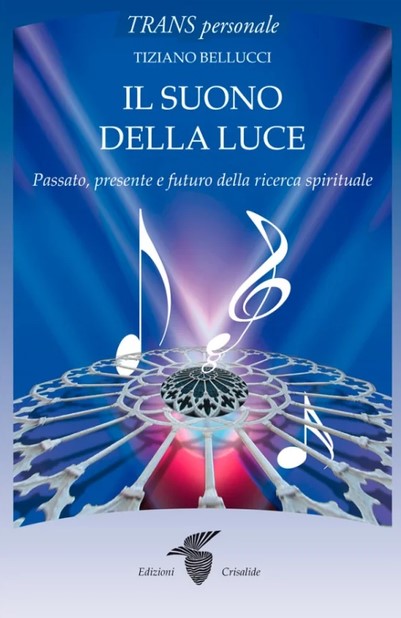
THE LIBRARY OF LIGHT “Books and Insights” and “Dialogues on the Logos” Texts and books by Tiziano Bellucci, anthroposophist, demonstrating a profound affinity between Anthroposophy, Optical Fusion, and the Neo-Alluminismo (Neo-Aluminumism) of Luciano Bichi. Official platforms: www.unicornos.comunicornoscorsi.com.
Curriculum Tiziano Bellucci 2026 + list of conferences (Download) Rudolf Steiner, through his color theory and living organic architecture (one need only think of the first Goetheanum), aimed to eliminate rigid, geometrically cold corners, replacing them with fluid, rounded shapes capable of welcoming the human soul and healing its inner wounds.While Steiner sought harmony by curving the sharp edge to allow energy and color to flow, Luciano Bichi’s Optical Fusion captures light through the engraving on the aluminum plate, transforming the rigidity of matter into a living, dynamic, and luminous experience. Both systems are based on the premise that art is not a mere ornament, but an objective force capable of acting upon the spiritual and psychological health of human beings. Integrating these two visions within the website archive will provide visitors with an extraordinary interpretive key, elevating Neo-Alluminismo far beyond local chronicles and placing it directly into the great flow of European spiritual philosophy—this ideal bridge between the Logos and Steiner’s Anthroposophy.

